
Principles, Engineering Considerations and System-Level Design
Introduction: Why Acoustic Absorption Matters in Real Systems
Acoustic absorption is a central concept in room acoustics and noise control engineering. In architectural environments, sound rarely propagates without interacting with surrounding surfaces and structures. These interactions determine how acoustic energy is reflected, transmitted or dissipated within a space.
For structural engineers, architects and designers of sensitive facilities such as semiconductor fabrication plants or research laboratories, acoustic absorption is not merely a matter of comfort. It affects speech intelligibility, noise levels, equipment performance and the functional usability of spaces. In highly controlled environments, poor acoustic behavior can interfere with measurement accuracy, communication, and even vibration-sensitive processes.
Acoustic absorption therefore represents a fundamental mechanism through which sound energy within a room is controlled. Understanding how absorption works and how it interacts with other physical processes in buildings, requires a system-level perspective that extends beyond the simple selection of “acoustic materials”.
Physical Basis of Acoustic Absorption
Sound propagates as pressure fluctuations in a medium, typically air in architectural environments. When an acoustic wave encounters a surface, the incident energy is divided into three principal components:
- Reflected energy
- Transmitted energy
- Absorbed energy
Acoustic absorption refers to the portion of incident sound energy that is not reflected back into the room and is instead dissipated within a material, object or structural system. In most absorbers, this energy is converted mainly into heat through viscous, thermal and structural damping. In panel or membrane systems, acoustic energy may first excite mechanical vibration, which is then dissipated through damping or transferred into the supporting structure.
This conversion occurs through several physical mechanisms.
Viscous losses in porous structures
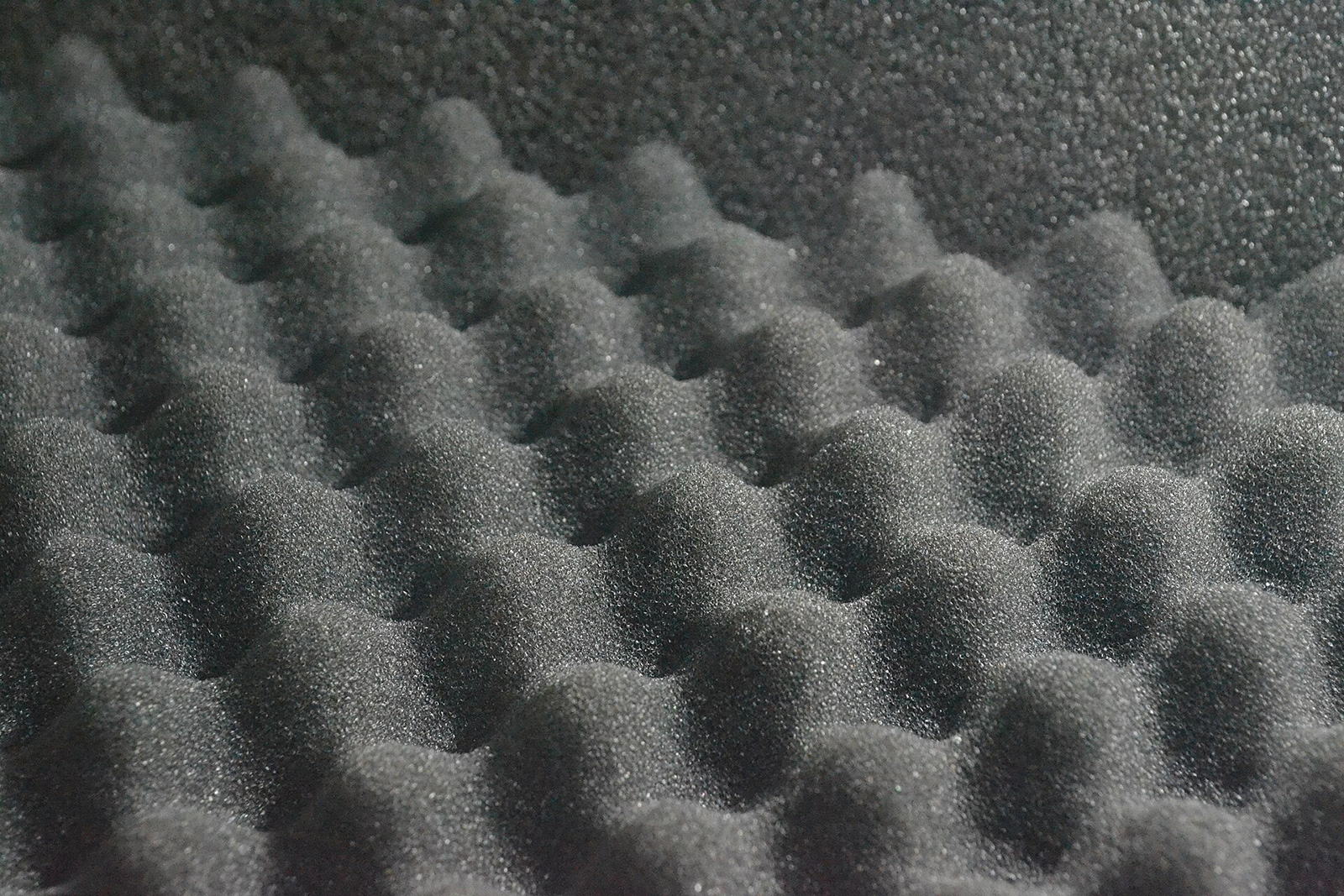
In porous or fibrous materials such as mineral wool or open-cell foams, air oscillates within small pores. Friction between moving air particles and internal surfaces causes energy dissipation.
Thermal losses
Compression and expansion of air inside small cavities produces microscopic temperature fluctuations. Heat exchange between the air and surrounding material leads to additional energy loss.
Structural vibration
In certain absorber types, acoustic energy excites motion in membranes or panels. Internal damping within the structure converts mechanical motion into heat.
Most practical absorbers combine several of these mechanisms.
The Absorption Coefficient
Acoustic absorption performance is commonly described using the absorption coefficient, denoted α.
The absorption coefficient represents the ratio between absorbed sound energy and incident sound energy at a surface.
α = absorbed energy / incident energy
In the ideal energy-balance definition, α ranges from 0 to 1, where 0 represents complete reflection and 1 represents complete absorption of incident sound energy. In standardized reverberation-room testing, apparent absorption coefficients can sometimes exceed 1 because of edge effects, specimen mounting and the difference between physical area and effective acoustic area.
α = 0 indicates complete reflection.
α = 1 indicates total absorption.
In practice, real materials exhibit frequency-dependent behavior. High absorption values typically occur only within certain frequency ranges.
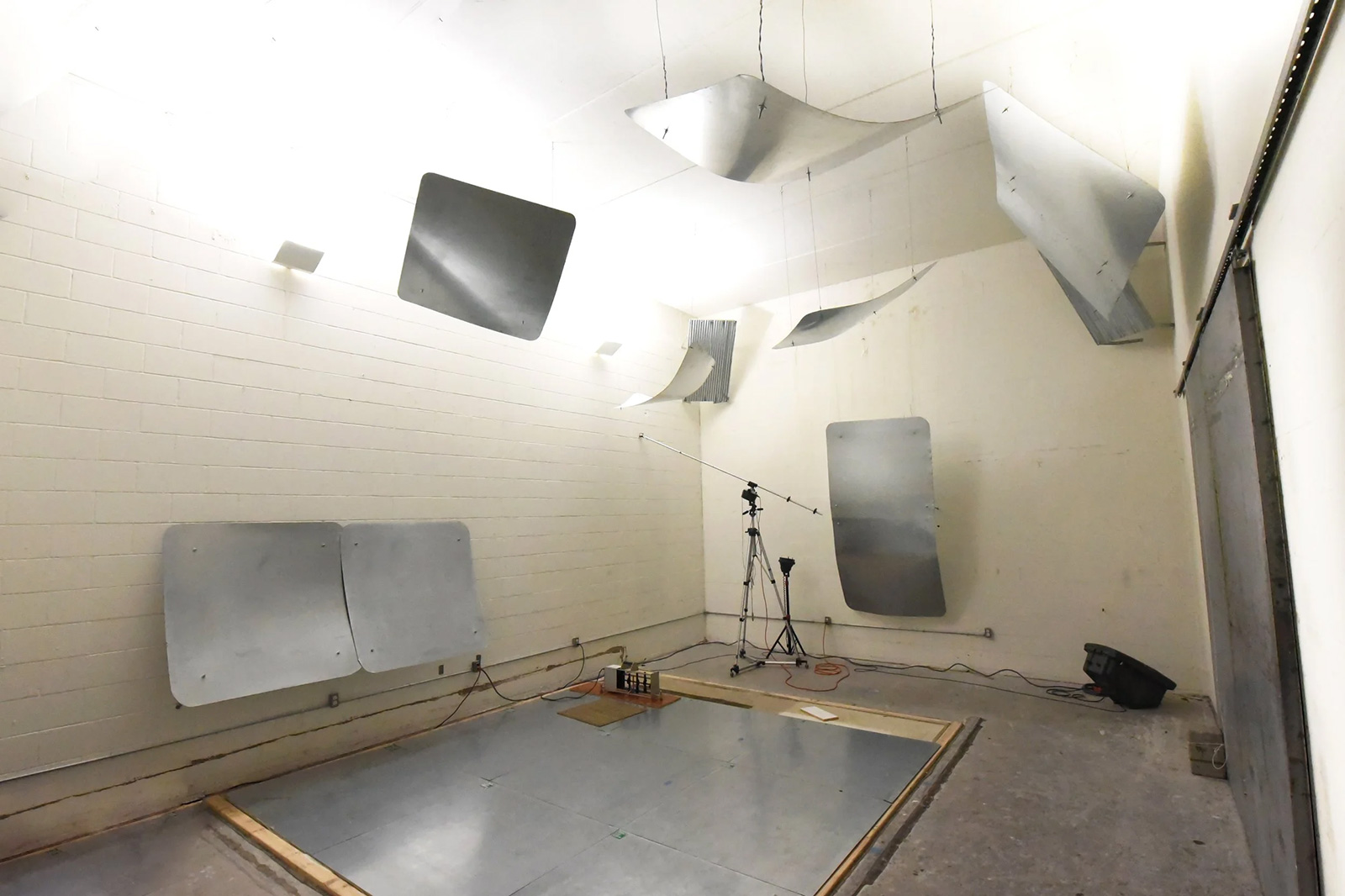
Measurements are usually conducted in reverberation chambers or impedance tubes under standardized conditions. However, in-situ performance may differ due to mounting conditions, air gaps, installation details and structural coupling with building elements.
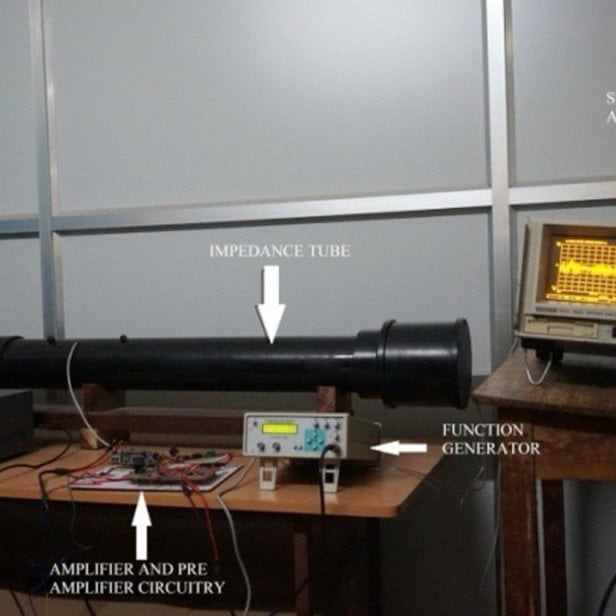
Because test conditions differ, absorption data should be interpreted carefully. Reverberation-room measurements generally represent diffuse-field behavior, while impedance-tube measurements represent normal-incidence behavior. Product data should therefore be reviewed by frequency band and by mounting condition, rather than relying only on a single-number rating such as NRC, SAA or αw.
Frequency Dependence of Acoustic Absorption
The effectiveness of acoustic absorption is strongly frequency dependent.
Porous absorbers are generally effective at mid- and high-frequency ranges but much less effective at low frequencies. This limitation arises from the relationship between absorber thickness and acoustic wavelength.
Low-frequency sound waves can have wavelengths of several meters. Thin absorptive layers interact only weakly with such long wavelengths.
Several engineering strategies are used to address low-frequency absorption:
- Increasing absorber thickness
- Adding air cavities behind porous materials
- Using membrane or panel absorbers
- Implementing resonant absorbers such as Helmholtz resonators
In most architectural projects, a combination of absorber types is used to achieve broadband acoustic control.
Types of Acoustic Absorbers
Porous absorbers
Porous materials include mineral wool, fiberglass and acoustic foams. Their performance depends on airflow resistivity, porosity and thickness.
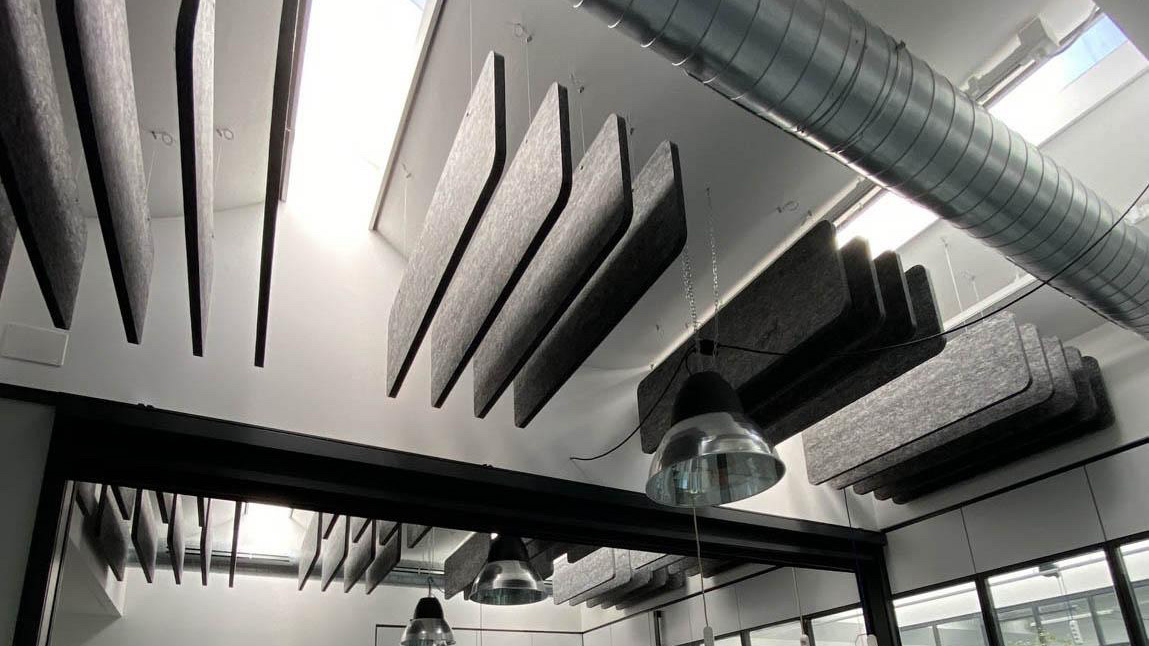
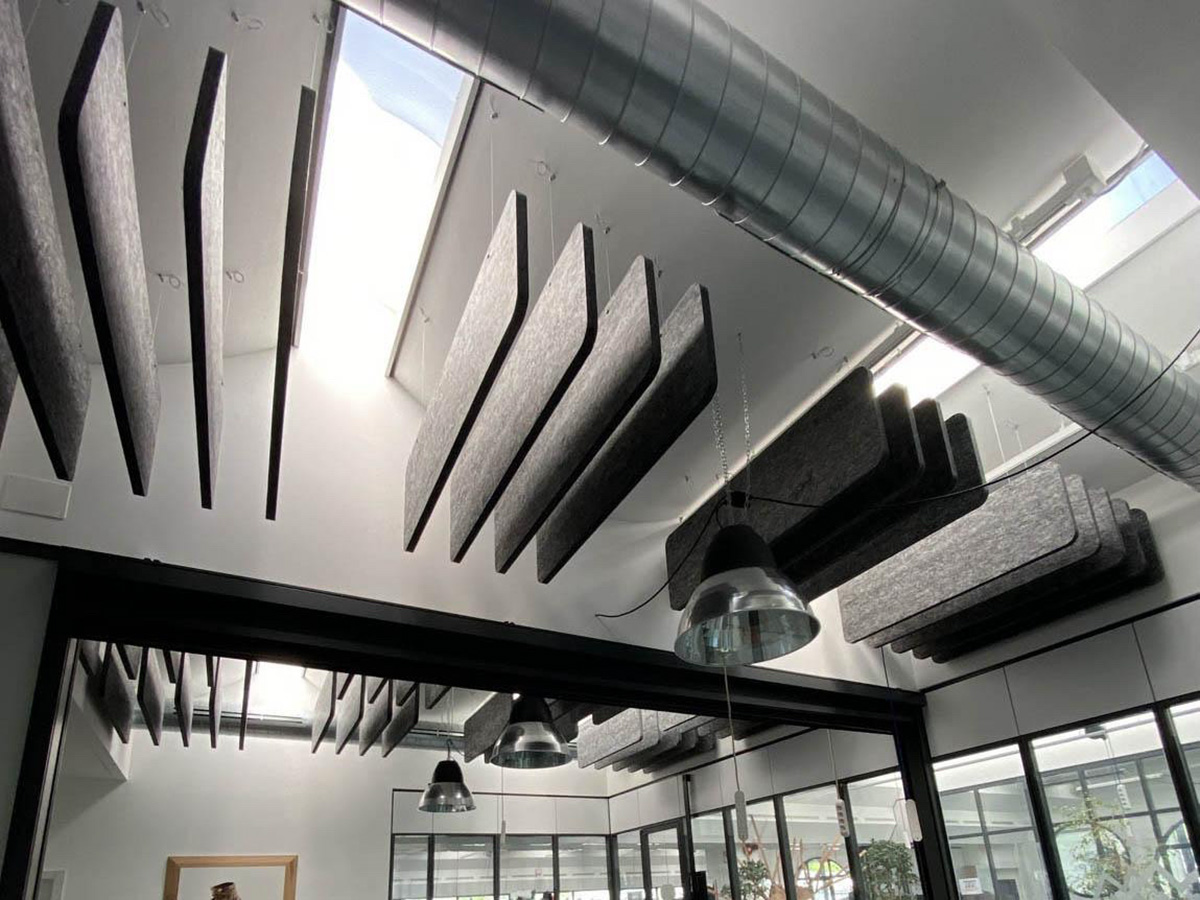
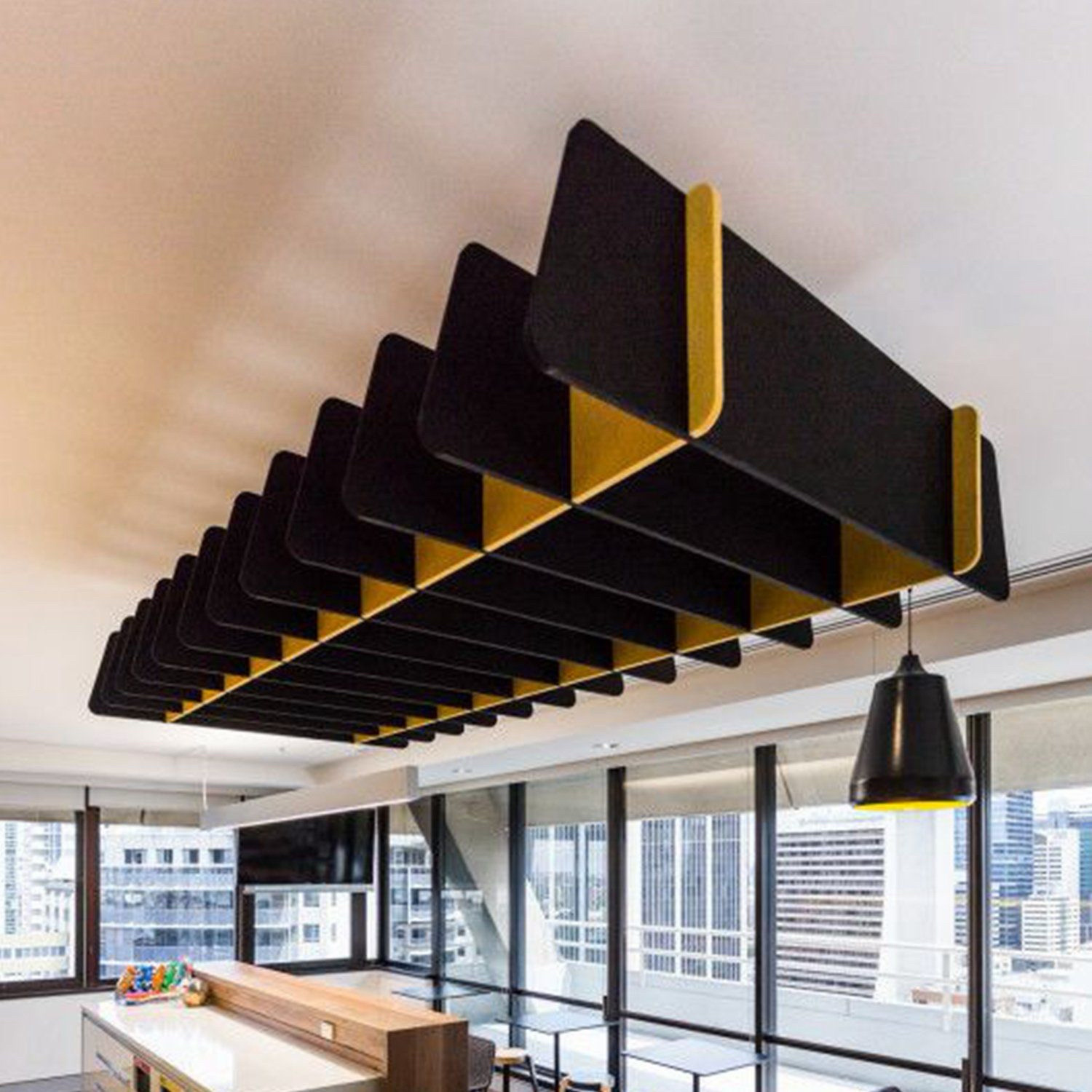
They are widely used in ceilings, wall panels and suspended acoustic elements and are particularly effective in controlling mid- and high-frequency reverberation.
Panel or membrane absorbers
Panel absorbers consist of thin panels mounted in front of sealed or partially sealed air cavities. Sound pressure causes the panel to vibrate, converting acoustic energy into structural motion.
These systems are often designed to target low-frequency resonances within a room.
Helmholtz resonators
Helmholtz absorbers consist of a cavity connected to the room through a narrow opening or neck. The mass of air in the neck interacts with the compressibility of the air inside the cavity, forming a resonant system.
These absorbers are typically narrowband and must be tuned carefully to the frequencies of concern.
Acoustic Absorption vs Sound Reflection
In enclosed spaces, sound energy is repeatedly reflected by surfaces. Hard materials such as concrete, glass or metal tend to reflect a large portion of incident sound energy.
Acoustic absorption reduces these reflections by dissipating part of the incident energy within the material.
The balance between reflective and absorptive surfaces determines how sound energy propagates within a room. Too little absorption can produce excessive reverberation, while too much absorption can reduce useful sound reflections and degrade acoustic clarity.
Acoustic Absorption vs Sound Insulation
Acoustic absorption and sound insulation address fundamentally different engineering problems.
Acoustic absorption reduces sound energy within a space by dissipating reflections.
Sound insulation, in contrast, limits the transmission of sound between different spaces by blocking or attenuating sound waves through structural barriers.
A material with high absorption is not necessarily effective as a sound barrier and vice versa. Proper acoustic design therefore requires distinguishing between internal sound control and inter-space sound isolation.
Reverberation and Room Acoustics
Acoustic absorption plays a central role in determining the reverberation characteristics of a room.
Reverberation time describes how quickly sound energy decays after a sound source stops. Excessive reverberation can reduce speech intelligibility and increase perceived noise levels.
In large rooms such as laboratories, industrial halls, or open office environments, insufficient absorption allows sound energy to persist and accumulate. Conversely, excessive absorption may create acoustically “dead” environments unsuitable for certain functions.
Engineering design therefore focuses on achieving appropriate reverberation characteristics for the intended use of the space.
Engineering Decision Framework for Acoustic Absorption Design
In real engineering projects, selecting acoustic absorption strategies requires consideration of multiple interacting factors.
Key parameters typically include:
- Dominant frequency range of noise sources
- Room volume and geometry
- Architectural constraints and available installation areas
- Interaction with HVAC and mechanical systems
- Maintenance and durability considerations
- Presence of vibration-sensitive equipment
For example, in semiconductor fabrication facilities or precision laboratories, acoustic design must account not only for noise reduction but also for interactions between airborne sound fields and vibration-sensitive instrumentation.
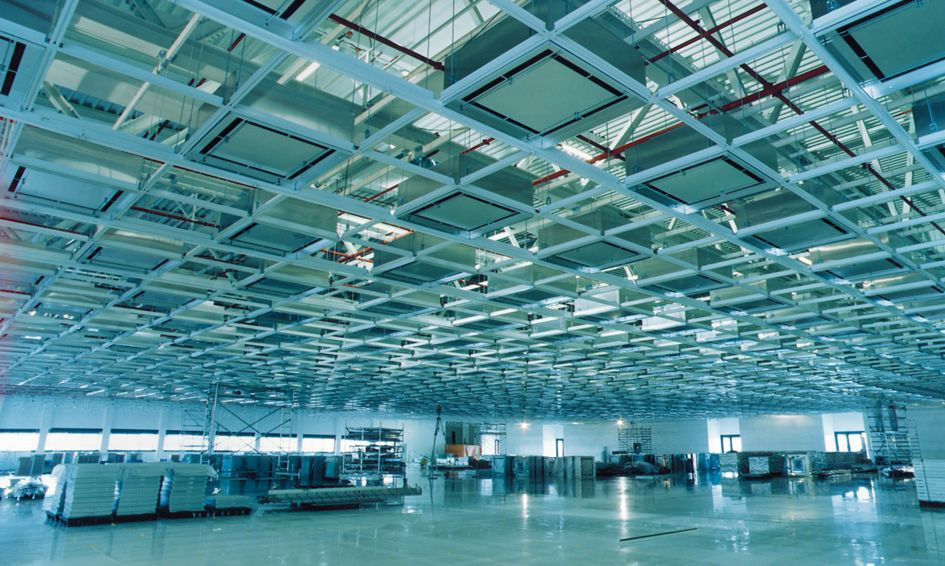
Consequently, acoustic absorption strategies are often evaluated using a combination of simulation, measurement, and iterative design adjustments.
In cleanrooms, semiconductor facilities and sensitive laboratories, acoustic materials must also satisfy non-acoustic requirements such as fire performance, cleanability, particle control, chemical resistance, low outgassing and compatibility with HVAC airflow.
Common Misconceptions
Several oversimplifications frequently appear in discussions of acoustic absorption.
One common misconception is that simply adding more absorptive material always improves acoustic performance. In reality, uneven or excessive absorption can create acoustic imbalance within a room.
Another misconception is that laboratory absorption coefficients directly represent real-world performance. Installation conditions, air cavities and mounting systems significantly influence actual behavior.
A third misunderstanding involves confusion between absorption and insulation, which address different physical mechanisms.
Engineering Analysis and Design Methods
Professional acoustic design typically combines several analytical approaches.
Room acoustic simulations are used to predict reverberation characteristics and spatial sound distribution. Environmental noise models can estimate the impact of external sources.
Measurements performed in laboratories or in situ provide empirical data that can validate simulations and refine design assumptions.
In complex facilities, acoustic design is often integrated with structural dynamics, vibration control, and mechanical system design within multidisciplinary engineering teams.
Frequently Asked Questions About Acoustic Absorption
What is acoustic absorption?
Acoustic absorption refers to the process in which sound energy is dissipated within a material or structure rather than reflected back into a room.
How is acoustic absorption measured?
Absorption is typically measured using reverberation chamber tests or impedance tube measurements that determine the absorption coefficient across frequency bands.
What materials provide effective acoustic absorption?
Common absorptive materials include mineral wool, fiberglass, open-cell foam, perforated panels and specialized resonant absorbers.
Why is low-frequency absorption difficult to achieve?
Low-frequency sound waves have long wavelengths that interact weakly with thin absorptive layers. Effective low-frequency control often requires thicker materials or resonant absorber systems.
What is the relationship between acoustic absorption and reverberation time?
Higher total absorption in a room typically leads to shorter reverberation times, improving speech clarity and reducing noise buildup.
Does acoustic absorption reduce sound transmission between rooms?
Not necessarily. Sound insulation requires mass and structural isolation, while absorption primarily reduces reflections within a space.
Where is acoustic absorption most important in buildings?
Absorption is critical in auditoriums, offices, laboratories, industrial facilities, educational spaces, and environments containing sensitive equipment.
Conclusion
Acoustic absorption is a fundamental mechanism for controlling sound energy in architectural environments. Through viscous, thermal, and structural dissipation processes, absorptive materials convert incident acoustic energy into heat and reduce reflections within enclosed spaces.
However, effective acoustic design requires more than selecting materials with high absorption coefficients. Engineers must consider frequency-dependent behavior, room geometry, structural interactions and system-level constraints.
For complex facilities such as research laboratories, industrial plants and advanced technology environments, achieving predictable acoustic performance typically requires rigorous analysis, simulations, and measurement supported by experienced engineering judgment.
Recent Projects